Welcome to our new website! We're still in the process of making updates and improvements, so please stay with us.
- Home

- News & Events
- Our Future is At Stake: Civil Society Reflects on ...


Our Future is At Stake: Civil Society Reflects on Present and Future of Financing for Development
Date: April 22, 2026 Time: 4:45-6:00 pm Venue: CR-8, UN Headquarters, NY


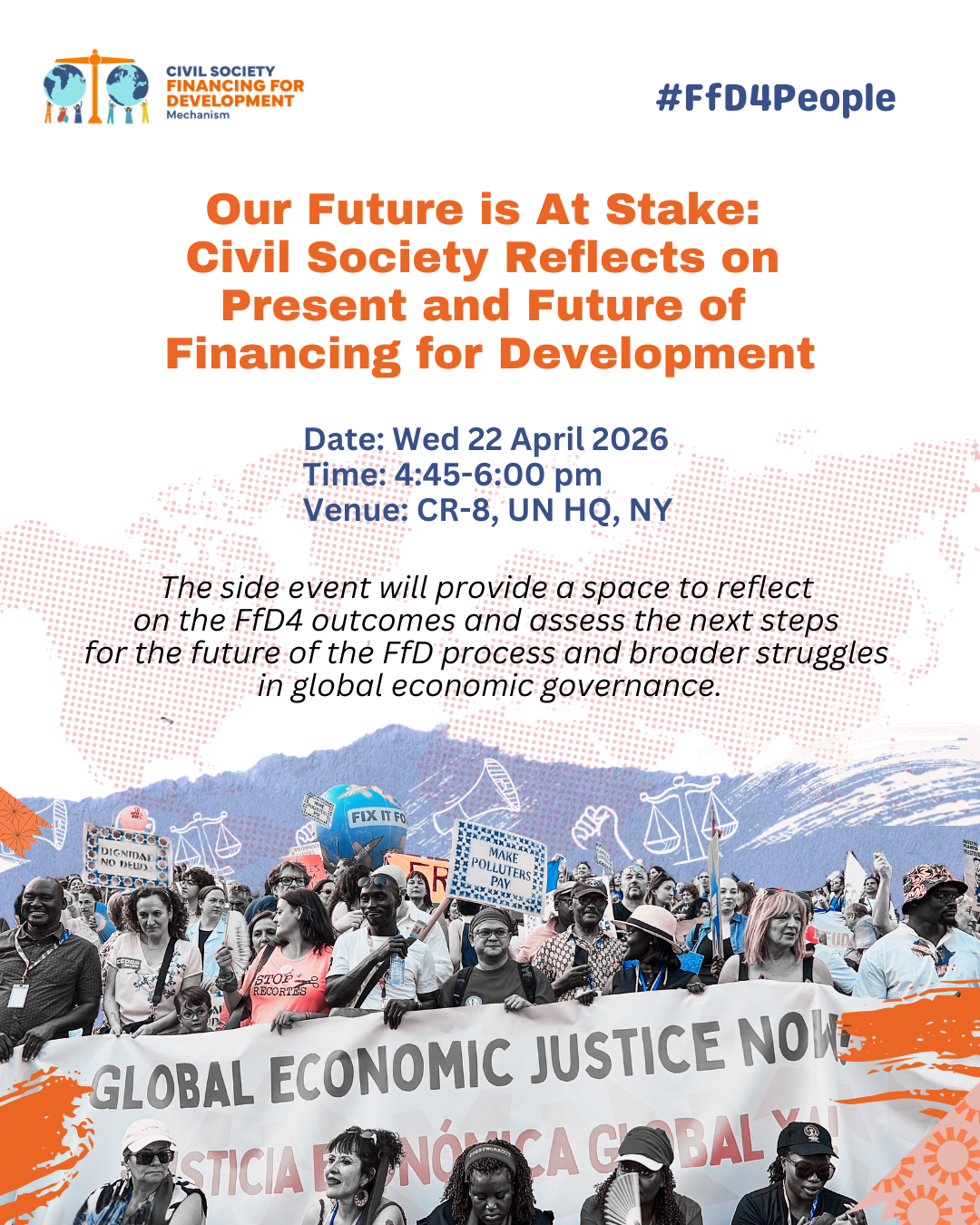
Several thousand civil society participants, coming from all corners of the world, gathered in Sevilla to reflect on the present and future of global economic governance, and on how the current system is long overdue for transformation. Blatant inequalities and injustice deeply rooted in how our global economy is shaped have not only pushed those most marginalized to unacceptable situations of hunger, poverty and distress, but also pushed way beyond our planetary boundaries, putting human life itself at risk and to the brink of extinction. Colonial legacies have not been seriously addressed and in fact continue to keep many countries trapped in cycles of dependencies. Extraction of wealth and resources from Global South to North maintains a system that is conveniently skewed to lock in economic and political power in the hands of those who benefit from the status quo. There is no more time for false solutions that tinker around the margins and maintain power imbalances untouched. Systemic transformations are needed, and UN member states, together with civil society, must seize the moment and finally choose to be bold. This side event will focus on reflecting on the FfD4 outcome and assess next steps for future of FfD process and global economic governance struggles.
Monterrey to Sevilla: Reflections on role of FfD conferences
As we get to the first opportunity to reflect and agree on FfD follow-up since Sevilla, it would be an important moment to take stock of all FfD conference outcomes. Particularly, to assess these outcomes in view of the intent and goals of the FFD process. FfD has a historical root of arising out of the active discontent of Global South countries about the systemic shortcomings of the international financial architecture. The first International Conference on Financing for Development (FfD) happened in Monterrey, Mexico, in 2002 i.e the “Monterrey Consensus”, in the aftermath of the Asian financial crises. The conference was an attempt to recover the UN’s voice on the global economic and financial system. What have been the impacts of the FfD conferences? What are the lessons?
Taking stock of role of FfD process in addressing global systemic barriers
For decades the net flow of investments has been moving from Global South countries into Global North countries. In other words, the international financial system has not actually been enabling the mobilization of resources for development in the Global South as it pretends to do. Rather than addressing the economic structures underpinning this outflow of resources from the Global South, there is a troubling trend in FfD to move focus to national level implementation in Global South and domesticating the agenda. The exception in this trend has been the historic moment in international tax cooperation with the establishment of the process to negotiate the UN Tax Convention. In what direction does FfD4 outcome decisions take us? Are there openings in the Compromiso de Sevilla to finally repair the historical extraction of resources and ensure future conditions for the right to development and self-determination of the Global South? What other proposals are there to address these imbalances?
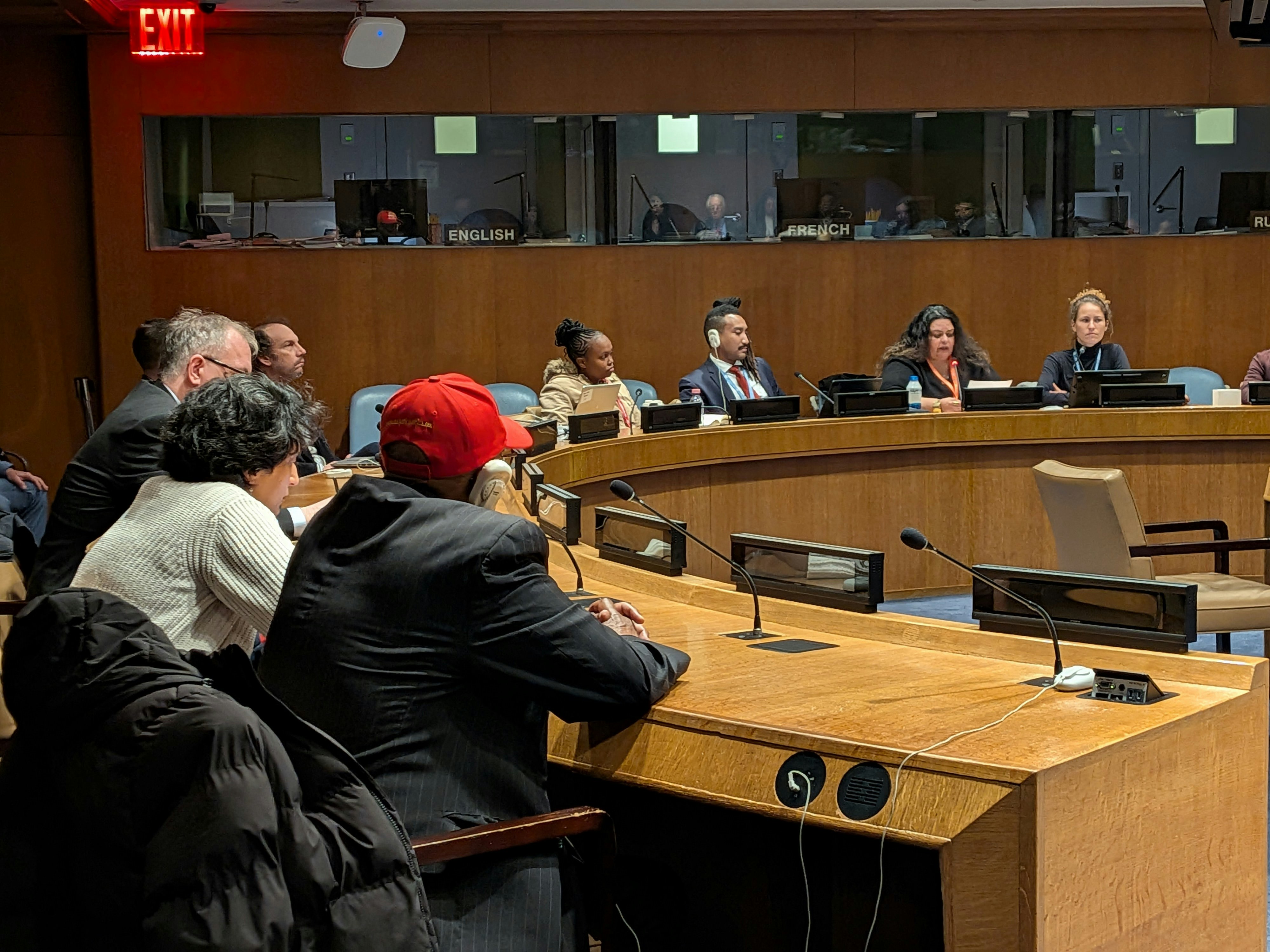
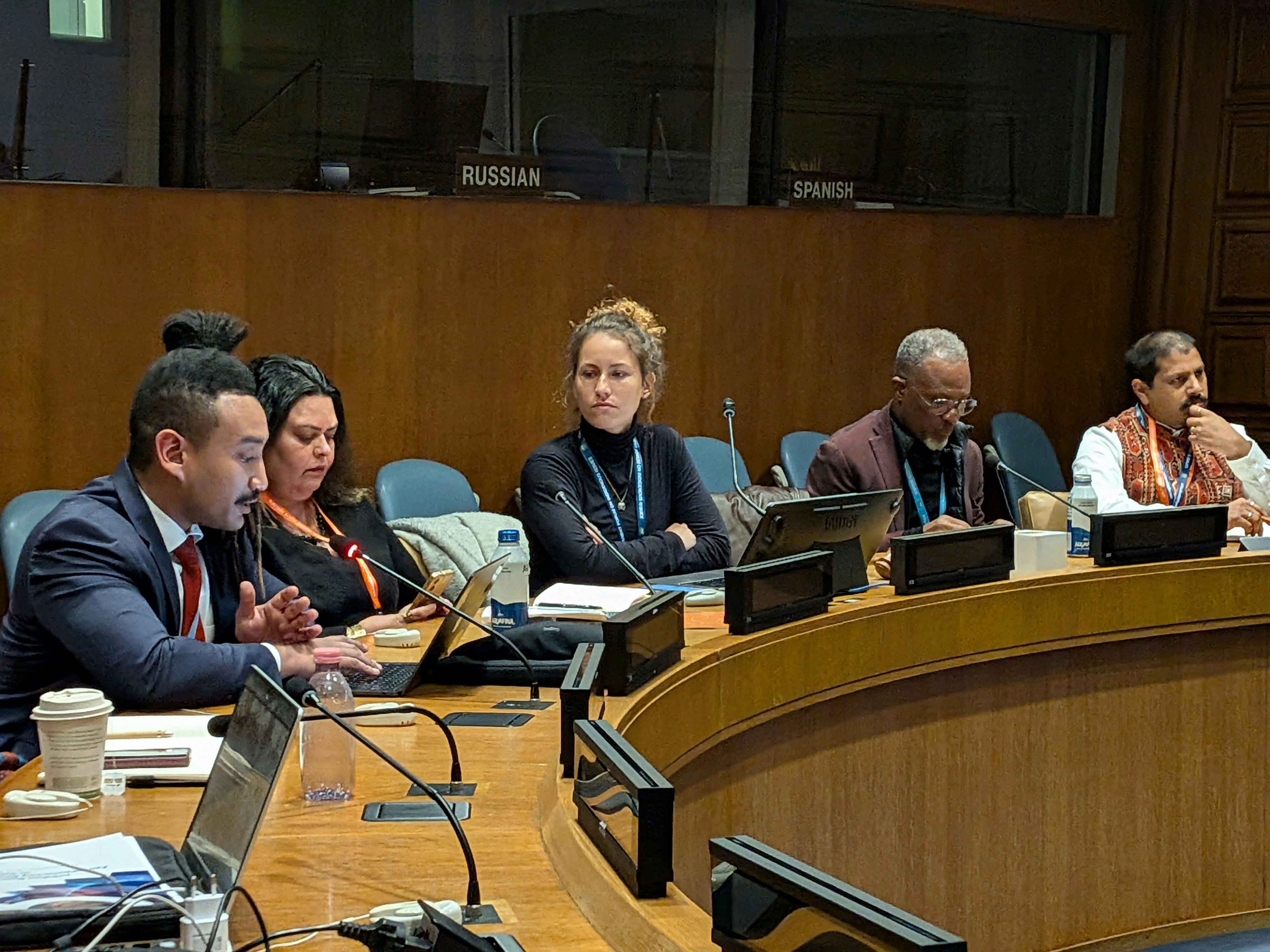
The format was a roundtable (Chatham House rule) with representatives from member states, civil society, academia, UN agencies and Secretariat to enable open discussions and reflections.
The discussion situated FfD historically as a process born out of crisis, from the Asian financial crisis to the 2008 crisis and COVID-19, and emphasized its mandate to address deep structural flaws in the international financial architecture. Speakers highlighted how today’s context, marked by war and rising geopolitical tensions, is further reshaping development priorities and risks entrenching a war-driven global economy.
The conversation also stressed the need to move beyond incremental reforms. Instead, speakers called for using the UN space to advance more ambitious, intergovernmental processes aimed at building a more equitable and democratic global economic order.
Looking ahead, the discussion identified key areas for continued advocacy within the FfD follow-up process, including debt, credit rating systems, and broader systemic reforms, while emphasizing the need to translate analysis into concrete political pathways.